
Current-state process mapping against SAP capability, with the gaps and workarounds documented plainly.
Module scope, integration points, and data model agreed before configuration begins.
Phasing that sequences value delivery against cost, risk, and the organization's capacity to absorb change.
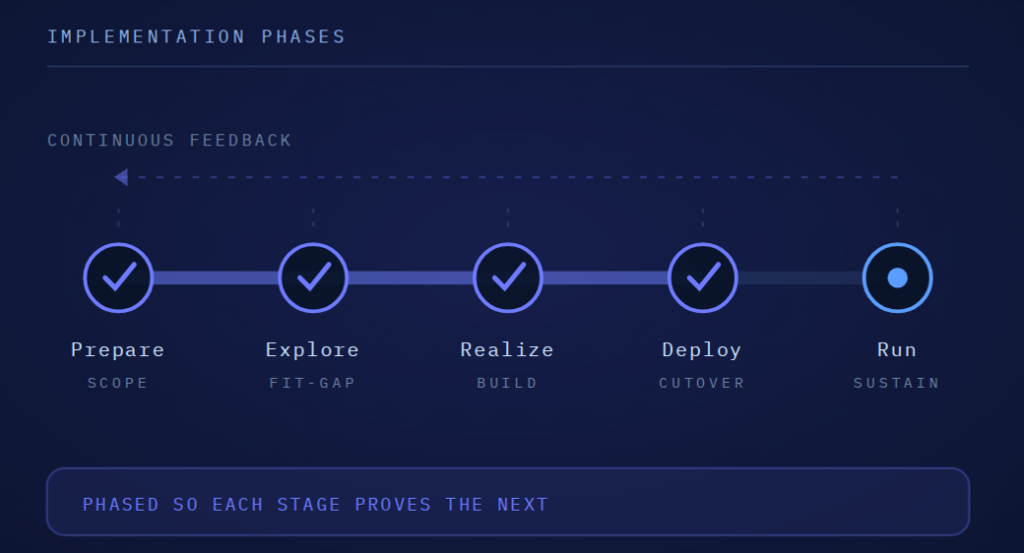
Module configuration driven by the agreed process design, with decisions recorded as they are made.
Extraction, cleansing, and load with reconciliation, so balances and master data are provably correct.
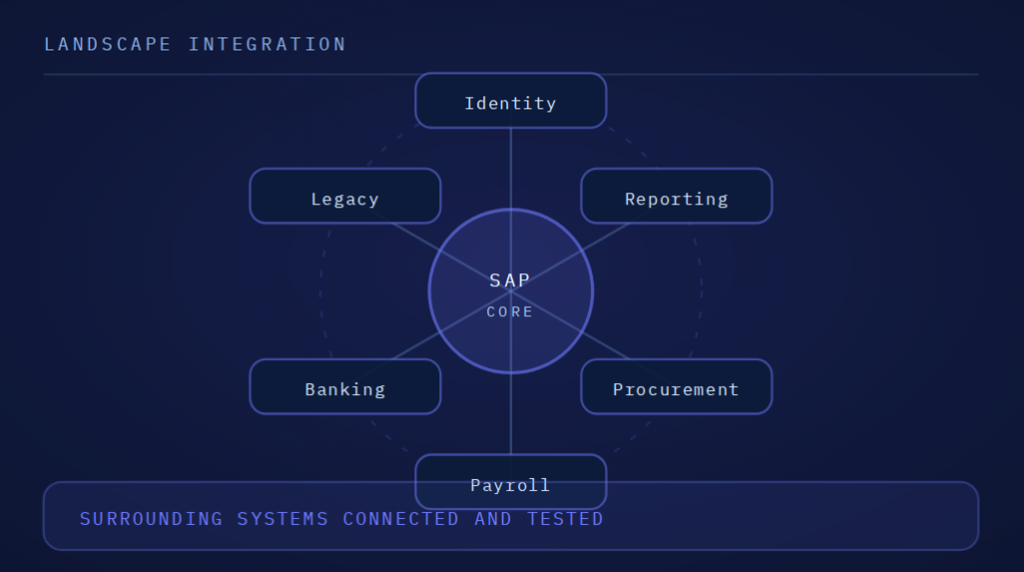
Connections to surrounding systems built and tested, including identity, reporting, and downstream feeds.
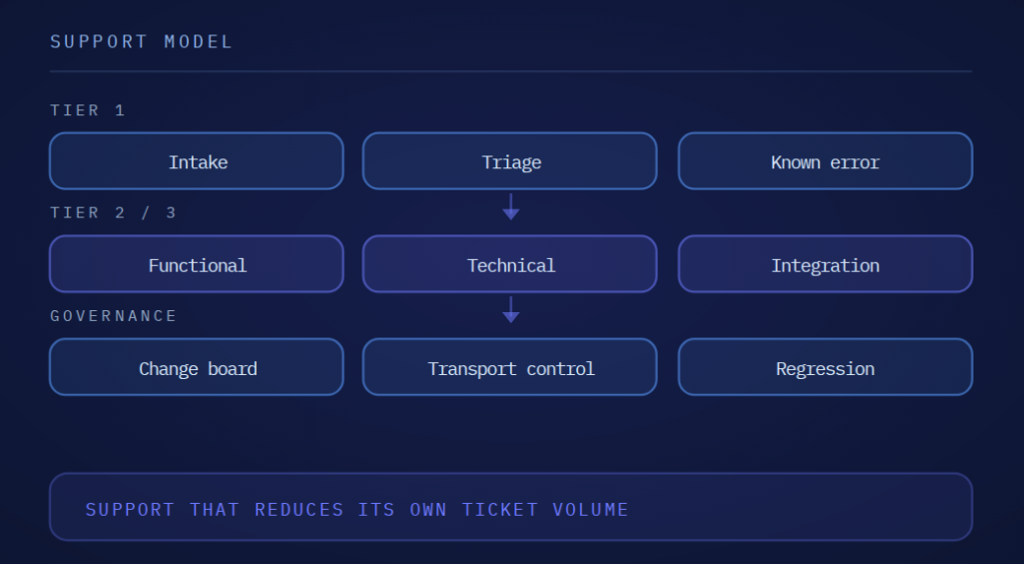
Tiered application support with agreed response targets and a named team that knows the landscape.
Transport governance and regression testing so changes reach production without surprises.
Recurring review of incidents and workarounds to find the configuration debt worth paying down.
From first roadmap through daily sustainment, delivered by consultants who stay past
go-live.
Current-state process mapping against SAP capability, so scope is settled on evidence rather than discovered during configuration.
1: Process assessment with gaps documented plainly
2: Target architecture and module scope agreed
3: Roadmap and business case phased to capacity
Configuration driven by the agreed design, with data migrated under reconciliation so balances and master data hold up to audit.
1: Module configuration with decisions recorded
2: Extraction, cleansing and reconciled load
3: Cutover planned and rehearsed before the date
The surrounding systems your landscape depends on, built and proven rather than assumed to work on go-live weekend.
1: Identity, reporting and downstream feeds
2: Banking, procurement and payroll interfaces
3: End-to-end testing across system boundaries
Tiered support from a named team that knows your landscape, measured on what it costs to run rather than tickets closed.
1:Tiered support with agreed response targets
2: Transport governance and regression testing
3: Configuration debt reviewed and paid down
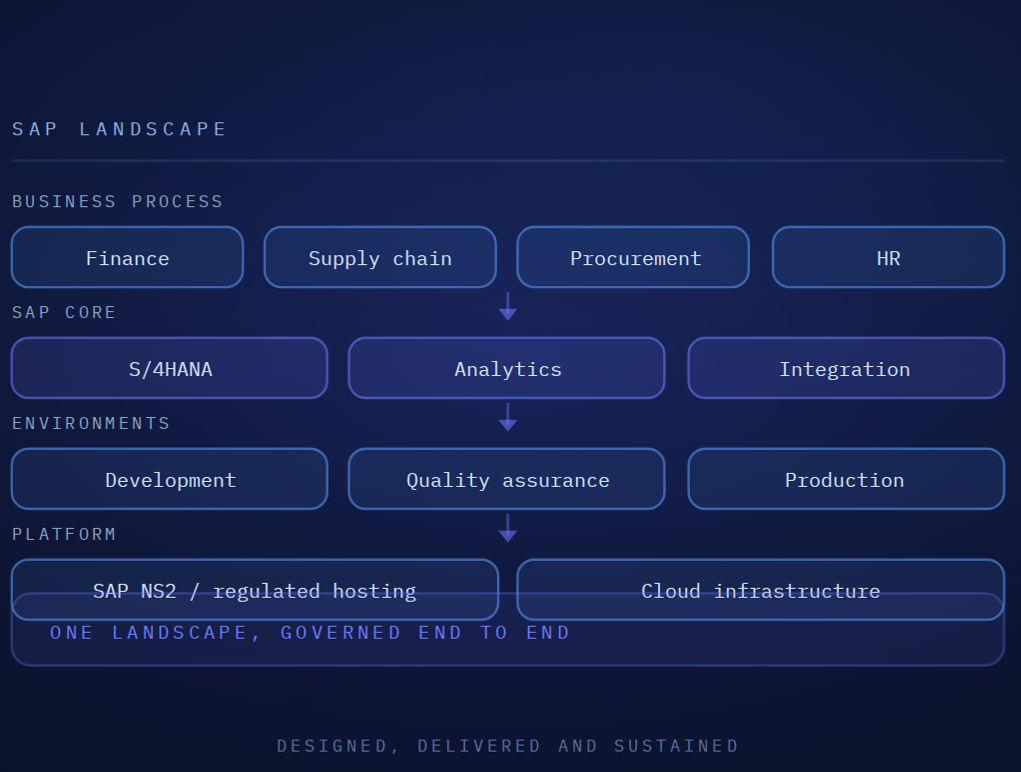
Delivery for federal and regulated workloads, including SAP NS2 environments.
Configuration rationale captured, so the next team is not reverse-engineering your system.
The consultants who designed it are reachable by the people who run it.
Incident trends and configuration debt reviewed, not just tickets closed.
Urgent enough to plan now, not urgent enough to rush badly. The right sequence is a fit-gap against your actual processes first, because the migration is the moment to retire configuration debt rather than carry it forward.
SAP National Security Services supports regulated and controlled U.S. workloads with the personnel and hosting restrictions those environments require. If your data carries federal handling obligations, it is likely part of the answer.
Yes. We start with a landscape review to document what is actually configured and where the undocumented workarounds live, then use tiered support from a known baseline.
Reconciliation at every step. Extraction and load are checked against source balances and record counts, with cleansing decisions logged so anything that changed can be explained during audit.