
Requirements mapped to implemented controls across NIST 800-53, 800-171, and FedRAMP baselines.
Structured review of the environment against the applicable baseline, with findings ranked by exploitability.
Customer security questionnaires and audit responses answered from a maintained evidence base.

Module configuration driven by the agreed process design, with decisions recorded as they are made.
Extraction, cleansing, and load with reconciliation, so balances and master data are provably correct.
Connections to surrounding systems built and tested, including identity, reporting, and downstream feeds.
Scanning, triage, and remediation tracking prioritized by real exposure rather than raw CVSS.
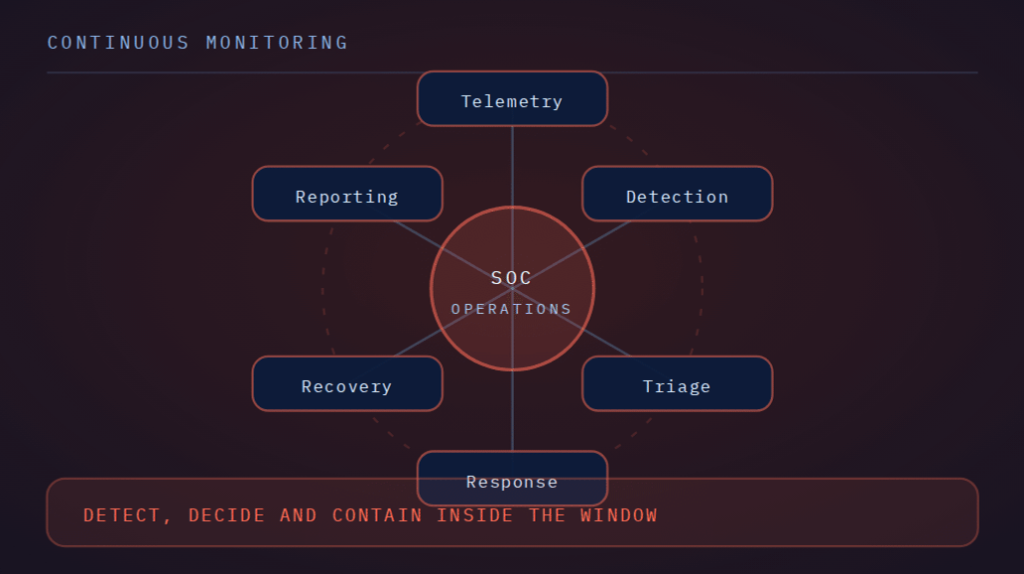
Telemetry and rules tuned to your environment, so alerts signal your analysts can act on.
Documented playbooks, defined roles, and exercises run before the day they are needed.
We map requirements to implemented controls, then keep the evidence current so an assessment is a review rather than a scramble.
1: Control mapping to NIST 800-53
2: Security assessments against baseline
3: Customer questionnaires answered from evidence
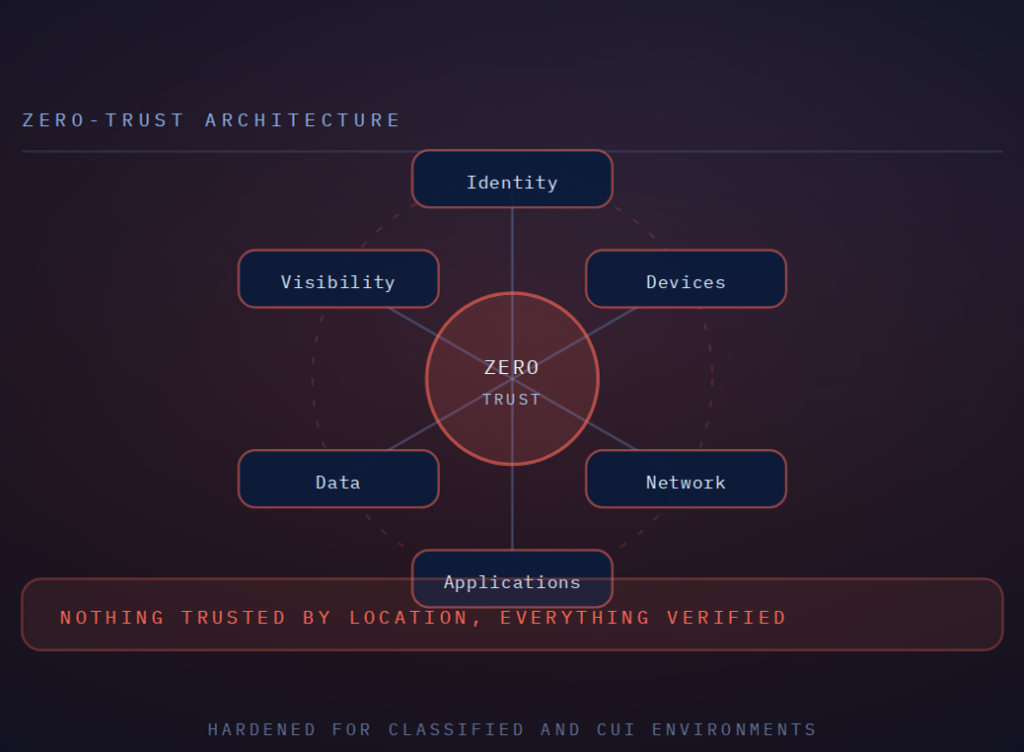
Identity, segmentation, and data protection designed so a single compromise does not become access to everything.
1: Strong authentication and least privilege
2: Network and workload segmentation
3: Encryption and key management
Scanning, triage, and remediation tracking prioritized by real exploitability rather than raw severity scores.
1: Continuous scanning and triage
2: Risk-ranked remediation plans
3: Tracked against a measured baseline
Documented playbooks, defined roles, and exercises run in advance, so response is practiced rather than improvised.
1: Playbooks and defined decision rights
2: Tabletop and live exercises
3: Containment, recovery and after-action review
Experience delivering where ATO and continuous authorization are the bar.
Findings, decisions, and remediation tracked so an auditor can follow the trail.
Engineers cleared to work on the systems that require it.
Risk reduction tracked against a baseline, not counted in tickets closed.
Scope agreed up front, then a structured review of identity, network, data handling, logging, and configuration against the applicable baseline. You get ranked findings with exploitability context, a remediation plan, and the evidence that would satisfy an assessor.
Control evidence is captured as the work happens rather than reconstructed before an assessment. Configuration exports, log samples, and approval records are collected on a cycle, so the gap between what you claim and what you can show stays closed.
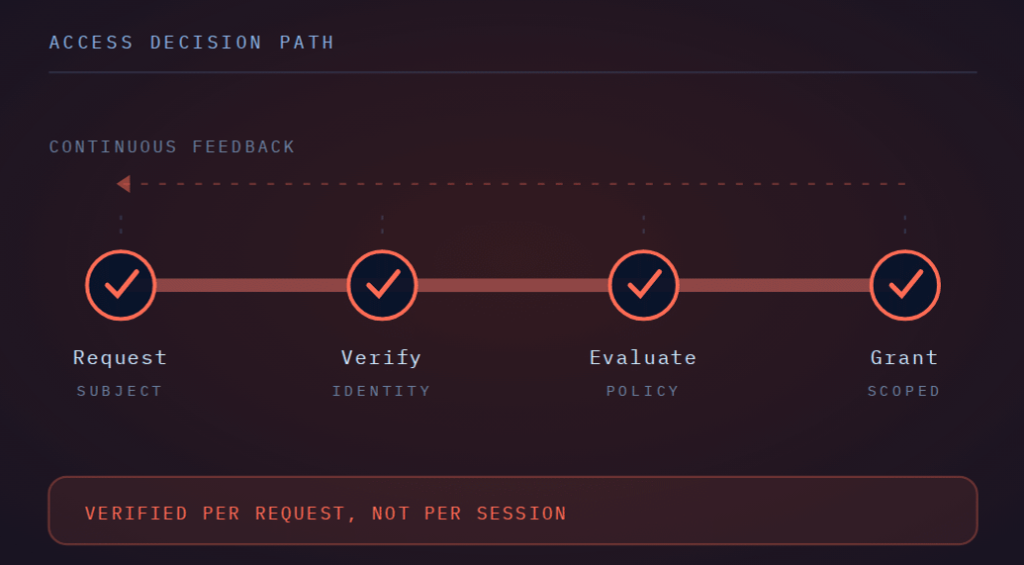
Most environments still grant broad access once a user is inside the perimeter. Zero trust verifies identity, device posture, and policy per request, and segments so a single compromise does not become lateral movement.
Both. We deliver point-in-time assessments and architecture work, and we can operate continuous monitoring, vulnerability management, and incident response as a running service.