Inventory every workload with its dependencies, data sensitivity, and business criticality scored.
Inventory every workload with its dependencies, data sensitivity, and business criticality scored.
Inventory every workload with its dependencies, data sensitivity, and business criticality scored.
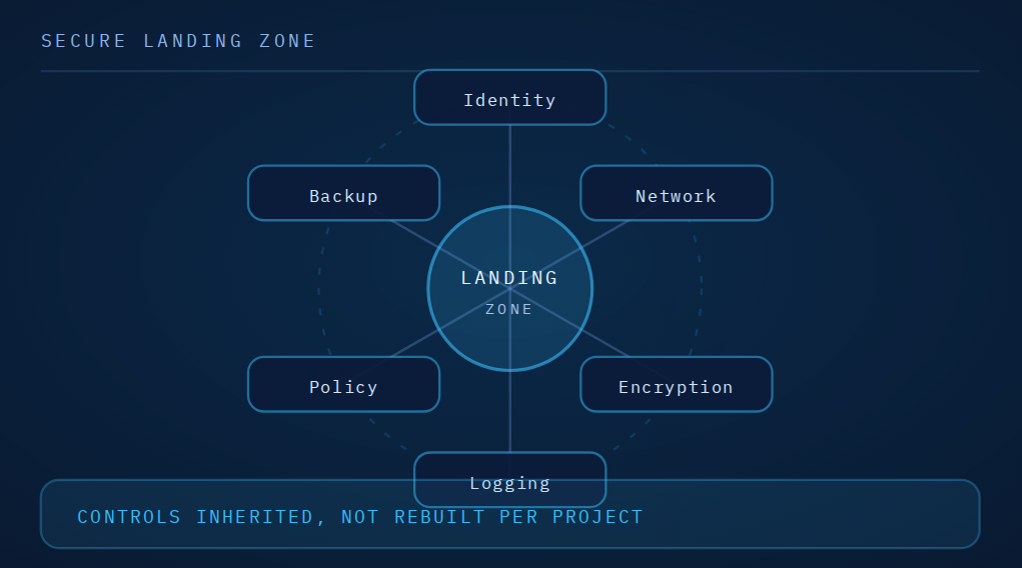
Account structure, policy boundaries, and preventive controls defined as code from day one.
Federated identity, segmentation, and private connectivity aligned to zero-trust principles.
Terraform and pipeline-managed environments, so what is running matches what was reviewed.
Retire undifferentiated infrastructure in favor of managed and containerized platforms.
Tagging, showback, and rightsizing so spend is attributable and controllable per workload.
Backup, recovery, and multi-zone design tested against the recovery objectives you actually need.
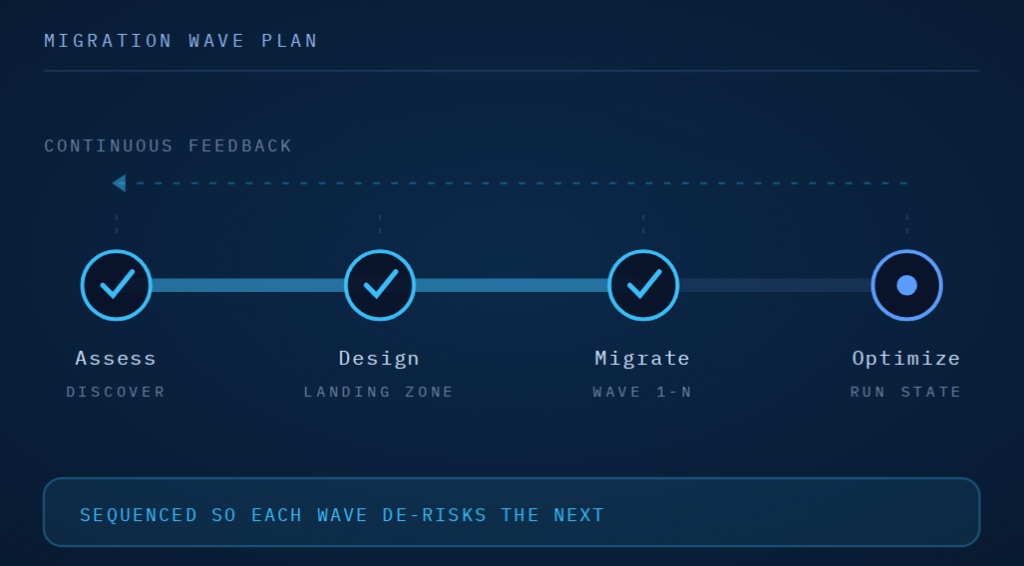
Every workload scored on dependency depth, data sensitivity, and remaining useful life, then assigned a disposition and sequenced into waves.
1: Application portfolio review and disposition
2: Wave planning so each move de-risks the next
3: Business case and total cost model up front
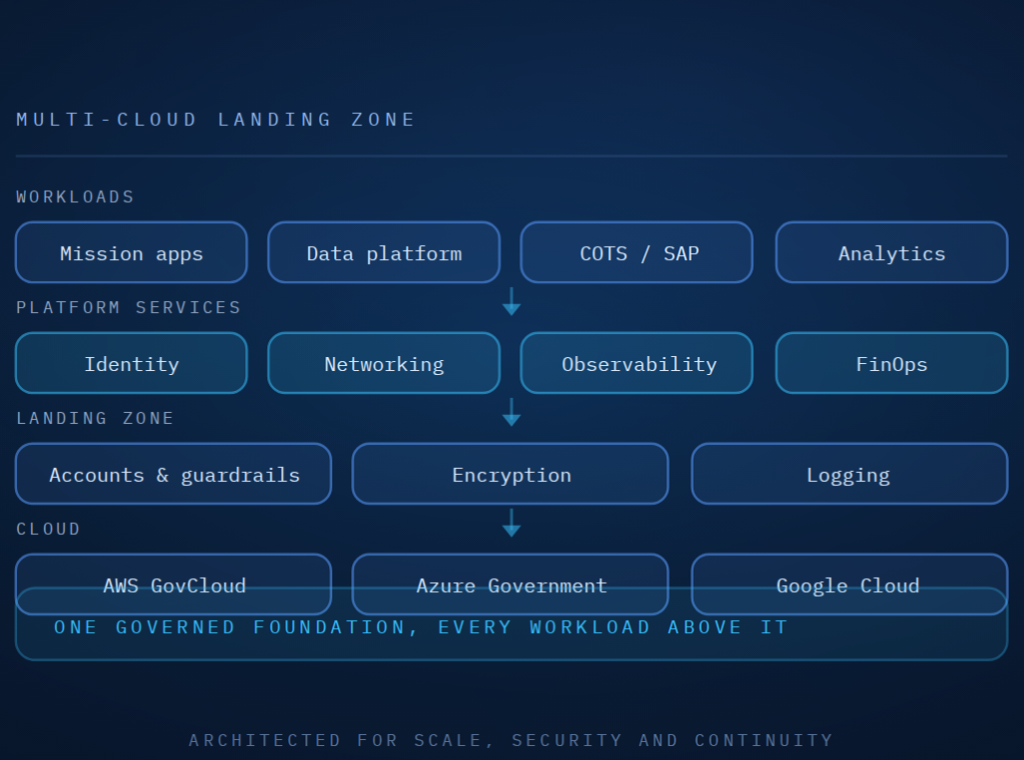
Account structure, identity, and network designed as code, so every system that lands afterwards inherits the security posture instead of renegotiating it.
1: Landing zone with preventive policy controls
2: Federated identity and network segmentation
3: Infrastructure as code, reviewable and reversible
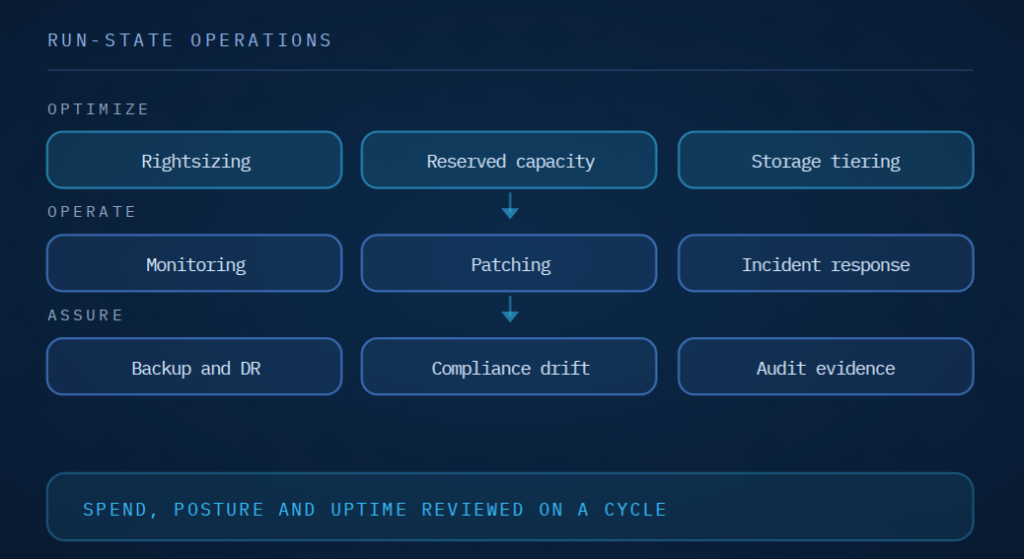
The daily work that keeps a cloud estate healthy after the migration team leaves, measured against the recovery objectives you actually need.
1: Monitoring, patching and incident response
2: Backup and recovery tested, not assumed
3: Continuous compliance checks against baseline
Cost control as an operating habit rather than a cleanup project, so every dollar traces to a workload and an owner.
1: Tagging and showback from the first account
2: Rightsizing reviews on a fixed cycle
3: Commitment coverage matched to steady workloads
Guardrails and controls land before the first workload does.
Architecture decisions and evidence captured as you go, not reconstructed.
FinOps from day one, so cloud spend stays attributable and defensible.
Delivery teams who can work inside the environments that require it.
Neither as a blanket rule. We score each application on dependency depth, data sensitivity, and remaining useful life, then assign a disposition. Refactoring is often right for systems with a short horizon; refactoring earns its cost only where the workload will carry load for years.
Tagging and showback from the first account, rightsizing reviews on a fixed cycle, and commitment coverage matched to genuinely steady workloads. Cost control is an operating habit, not a cleanup project.
Yes. We deliver in AWS GovCloud and Azure Government, and our teams include cleared engineers where the environment requires them.
We can run it. Managed operations covers monitoring, patching, incident response, backup and recovery testing, and continuous compliance checks against your baseline.